45,000+ products added to our catalog
.png)
Many brands introduced new products in time for Valentine’s Day, so we named this updated catalog, our 32nd, as “Valentine” 🧡.
We now have 675,655 packaged food products in our catalog, which is the equivalent of the product assortment of 22 grocery stores combined.
Our catalog is fresher than ever
Starting with this release, we are accelerating our pace of updates to the catalog.
In 2024, we updated our catalog on a quarterly basis. In 2025, we now update product information on a schedule aligned with American holidays and special events, such as the Superbowl, Valentine’s Day, Easter, Mother’s Day, Independence Day, etc.
This accelerated schedule is intended to capture new product introductions and product refreshes more frequently, associated with 14 calendar occasions.

Notable new food products
New products are added to our catalog so that clients have timely access for matching POS data, monitoring shelf health, building great PDPs, and other applications.
The products below are examples added before the Super Bowl and Valentine's Day, and when new private label and size variants were introduced.

Thank you for following our progress! If you would like more information, please reach out. I’d love to hear how we can support your work.
Warm Regards,

David Goodtree
Founder and CEO, Foodgraph
More to explore
Discover additional articles, updates, and perspectives.
The Great AI Debate
Our executive team is having a heated debate about the proper use of AI.
The debate is passionate, respectful — and I believe — highly productive.
AI is deceptively good. Initial AI results are high-quality. The LLM explains its “thinking” robustly in natural language. Humans are convinced.
The user may even say “My friend Claude got it right”.

Our CTO is worried that AI tools are becoming agents of human assimilation. Users unwittingly abdicate their responsibility to a convincing bot, because the results appear credible. He calls this phenomenon the “Borgification” of software engineering, referring to the famous Star Trek story line.

Our VP PM is more sanguine, saying “Claude is my fast dumb friend” who needs oversight. She agrees with Anthropic’s President Daniela Amodei, who believes “Claude is really a tool to help promote your ability to think more deeply, to solve problems, and to be ambitious about the types of projects you are taking on.”

Our AI Architect shared how Steve Jobs described a rock tumbler as a metaphor for how great ideas come to life. This machine smashes together crude, unfinished inputs to create beautiful polished stones. Jobs explained that 90% of the work in creating great products is not in the big idea or the raw materials, but through the combination of friction + time + teams to turn the inputs into amazing products.
Job’s metaphor rings true to me:
Friction + time + teams create great products, not AI or other tools.
The SaaS Apocalypse may be coming for some, but only when humans abdicate their role.
AI raises the bar of what humans can do — and are now expected to do.
To paraphrase Steve Jobs:
We — the humans — are the rock tumblers, not AI.
Watch: Daniela Amodei, Responsible AI and Steve Jobs’ Rock Tumbler Metaphor.
How Can We Help Your Work?
Send me a note with thoughts or questions. I’d love to hear how we can support your work.
Warm Regards,

David Goodtree
Founder and CEO, Foodgraph

Compare CPG Data Vendors
Our Prompt
Gemini’s Response
Managing CPG product data is notoriously chaotic—UPCs mutate, attributes go missing, and data from different sources rarely aligns perfectly.
To answer your question directly: Yes, Foodgraph is a highly capable and innovative vendor for CPG product data, particularly if you are dealing with fragmented data sources, looking to enrich Product Description Pages (PDPs), or building out the infrastructure for a Retail Media Network (RMN).
Here is a breakdown of why Foodgraph is a strong choice, followed by a comparison with other major players in the CPG data space.
Why Foodgraph Works Well for PDPs and RMNs
Founded in 2019, Foodgraph takes a modern, AI-first approach to grocery data. Rather than just acting as a pipeline for whatever data the brands provides, they actively aggregate, clean, and enrich it.
- For PDPs (Product Description Pages): Foodgraph excels at filling content gaps. They use proprietary “vertical AI” agents to pull from dozens of sources, automatically fixing missing or inconsistent attributes (like net weight, count, and ingredients). They also maintain a massive, frequently updated catalog (over 1.38 million U.S. products as of early 2026) that includes national brands, private label, seasonal SKUs, and long-tail items, ensuring your digital shelves look complete.
- For RMNs (Retail Media Networks): An RMN is entirely dependent on high-quality, standardized data to match ads to the right products and track conversions. Foodgraph’s standout feature here is its ability to resolve “messy GTINs” in milliseconds. By translating unrecognized or mutated UPCs into standardized formats, they allow RMNs to accurately match products across retailers and monetize transactional data without losing revenue to data errors.
Foodgraph vs. Other CPG Data Vendors
The CPG data landscape is crowded, but vendors generally fall into specific categories. Here is how Foodgraph stacks up against the legacy giants and specialized platforms.
The Verdict
- Choose Foodgraph if: You are a retailer, RMN, or app developer struggling with incomplete data, broken UPCs, and inconsistent catalogs. Their AI-driven “Context Graph” approach is uniquely tailored to automatically fix these exact issues, saving massive amounts of manual labor.
- Look elsewhere if: You are a large CPG brand looking primarily for an internal Product Information Management (PIM) system to centralize your own marketing workflows (in which case, Salsify or Syndigo is better), or if you need to meet strict global GDSN supply chain mandates (where 1WorldSync is required).
Our Take
Prompting LLMs to rate your company is useful to understand your positioning for GEO (Generative Engine Optimization) and AEO (Answer Engine Optimization).
We agree with Gemini’s assessment of Foodgraph. We also liked how it succinctly applied its own knowledge base to position us relative to others.
One subtlety it missed: Many customers of CPG data services buy from multiple vendors. We think this is an important point to recognize. Depending on the use case, it may be the best approach for specific situations.
Similarly, some of the other vendors listed are Foodgraph customers or current prospects. Instead, our services complement their offerings and we go-to-market together.
Additionally, while 1WorldSync is still active with continuing contracts, the company was acquired by Syndigo in September 2025, a fact which all LLM responses missed.
Try This at Home
To understand how LLMs “think” about your business, just prompt your favorite LLM(s). The results may point to opportunities for improving your content marketing strategy.
How Can We Help Your Work?
Send me a note. I’d love to hear how we can support your 2026 goals.
For recent news, see:
- CPG Showdown: Love vs Strength for a summary of our most recent catalog release.
- Context Graph for CPG for some insights into our AI approach.
Warm Regards,

David Goodtree
Founder and CEO, Foodgraph

Context Graph for CPG
David: What does “context” mean for data platforms?
Ophir: Ever since we started tackling the problem of messy, fractured product data, we found that domain knowledge is the key to making good decisions.
Context in AI goes beyond recording state data and decision traces. It must include the basis of the decision. For specific verticals — like CPG — the reasoning is usually embedded in industry-specific domain knowledge.
David: What does this mean in real life?
Ophir: A key aspect of our data platform is that industry knowledge is embedded in our logic. But the more expertise that we added, it became harder to manage, especially for performing QA.
This problem led us to add human-readable “context” right alongside the data results. This approach was powerful and efficient. It enabled agents, analysts, and developers to trace the chain of decisions for audit or validation.
Context is embedded vertically in our stack. Throughout our schema and processes, we can observe the entire "sausage-making" process, with natural language traces that lead clearly to the final outcomes.
David: Can you give some examples of domain knowledge about CPG products?
Ada: Sure, for example: How are units of measure correctly expressed in food versus non-food products? We see unexpected mutations all the time, such as made-up or foreign acronyms, even from “sources of truth” such as brand syndication and major retailers.
John: Another example: FDA regulations can be used to validate Nutrition Facts data. The FDA has strict requirements, which are codified in the Federal Register and have the force of law, but are often not applied on product description pages.
David: We see all the time how FDA regulations about food labeling, as expressed in the FD&C Act, are often violated on retail websites.
How do retailers get away with it? Because unlike food brands, grocers are not subject to federal oversight of product description pages.
Ophir: These are good examples of how we use domain knowledge to make decisions about normalizing, fixing, and enriching attribute values. While we don’t know about travel and automobiles, we do know CPG.
David: How does recording context help?

Ophir: Context is necessary to describe why decisions were made. It must be easily observable, auditable, and stored as first-class data.
David: Aren’t some data sources always reliable, so context about decision-making isn’t needed?
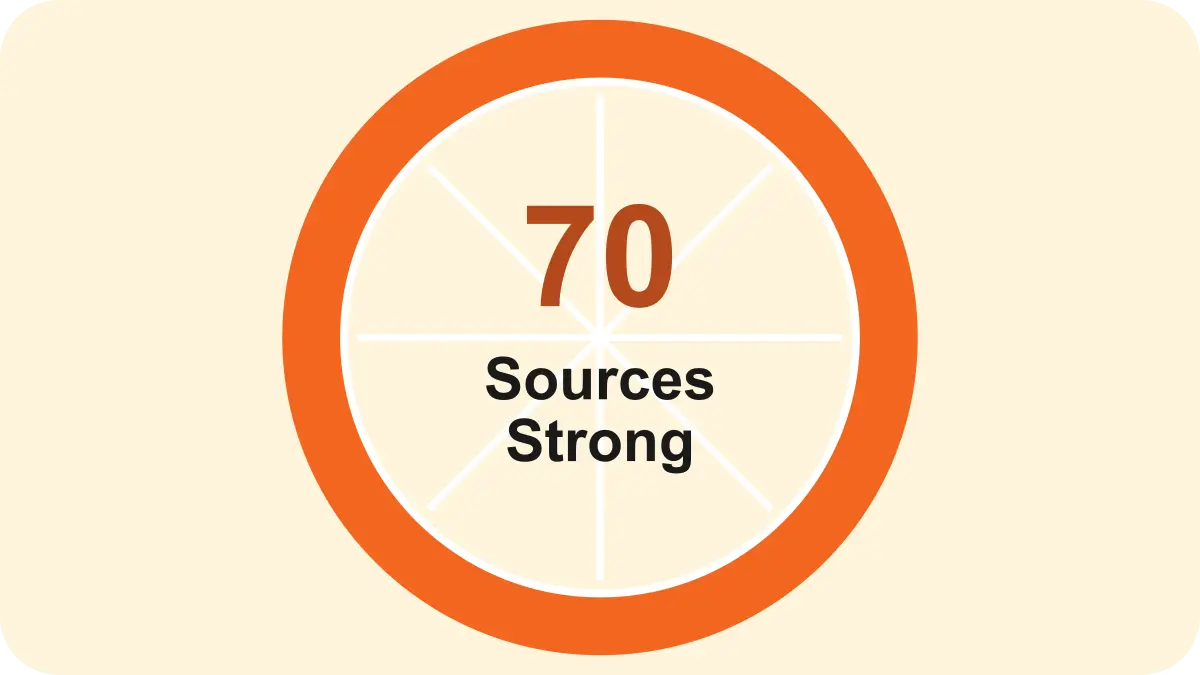
Ophir: Among the 47 sources we currently ingest, all have significant gaps and inaccuracies.
Ada: Some data sources have excellent quality, but only cover a subset of brands. Others, like syndicators, don’t have private label products. And long-tail SKUs are specific to each source, or not present at all.
John: Yes, and key attributes are often missing, such as images or net weight.
David: Sounds like a mess. How do we deal with it?
Ophir: We expect data chaos. Gaps and errors are the problems we solve for.
David: Aren't LLMs a reliable source of product data?
Ophir: Looking at generic AI results, they do a great job at synthesizing and generating data. But general LLMs don’t have vertical knowledge to classify with accuracy, correct errors, derive missing values, or adjudicate conflicts.
Ada: The answers from LLMs are only as good as the information they gather. We often see inaccurate results from general AI search and tools. Garbage in, garbage out still applies in the age of AI.
David: Is the answer to throw an army of human experts at the problems?
John: Human experts do have the knowledge, but an army of them is expensive and hard to manage. However, their knowledge can be embedded in vertical AI to create quality data at scale.
David: When did we start using context?
Ophir: We architected context from the beginning. We just didn’t call it a “Context Graph” because that term didn’t exist. Handling context as first-class data enables our systems and people to do their jobs better. We embed our expertise to improve quality and frequency, then capture how that expertise was used to create those better outcomes.
Ada: A simple example is knowing that cocktail mixers like tonic are non-alcoholic, even if retailers or brands list them in an alcohol category.
John: LLMs often get this classification wrong too. Humans like Ada never do 🙂.
David: These CPG nuances matter in lots of use cases, such as PDPs, digital analytics, nutrition and even price optimization.
Ophir: As our contexts grow, our learning compounds. The more we add to the graph, the more we are able to do better. Compare this context approach with hard-coded rules for addressing endless edge cases. That becomes unwieldy and doesn’t scale.
David: When does the Context Graph come into play?
Ophir: In our view, a Context Graph is systems of agents that enable autonomous decision-making across workflows. This full AI autonomy — when AI makes decisions across workflows — has not yet arrived. We see the benefits and the paths to get there, and we are working towards them.
David: Where are we on the journey to a Context Graph?
Ophir: The first requirement is having an AI Native system, with schemas and processes that are designed for context, not just state and observability. We re-architected our systems to be fully AI Native in 2024.
Second, we treat context data as “first class.” This means the "Why" data is of equal importance to all other data types.
Third, our agents already utilize context data to decide, store, observe, and audit decisions in discrete workflows.
We believe that the full concept of the Context Graph will be realized when systems of agents — not just specific services — can exercise autonomy across workflows with provable superiority.
David: Why not sacrifice quality to be more efficient?
Ada: Our value proposition is strongly rooted in quality data.
John: We aggressively lean into AI, but we won’t “ship it” if the results are not better or cause harm.
Ophir: We see a clear path to the Context Graph. We believe it describes how data businesses will scale in the age of AI, with quality and efficiency, grounded in domain knowledge.
David: Thank you, Ophir, John, & Ada. Glad to be on this journey with you!
For our first mention of the Context Graph, see our recent blog post The CPG Showdown: Love vs Strength.
For more on how context graphs are being discussed across the tech and venture communities, see What are context graphs by Simple.AI and Context graphs one month in by Foundation Capital.
For the original Context Graph idea, see AI's trillion-dollar opportunity: Context graphs, by Foundation Capital.
Thank you for following our progress. Send me a note with thoughts or questions. I’d love to hear how we can support your work.
Warm Regards,

David Goodtree
Founder and CEO, Foodgraph
Get better CPG product data today.
Book a demo today to learn how Foodgraph can help.