Fall Flavors and 75,000 New SKUs

Our newest catalog release adds 75,000+ new items, with the biggest growth in non-food categories spanning Household, Personal Care, Health & Beauty, and Pet. New fall flavors join the mix, including retailer-exclusives and private label product introductions.
Catalog
3 min read
Author:
David Goodtree
Date:
September 22, 2025
Subscribe

Subscribe to receive our latest news direct to your inbox.

Foodgraph offers the largest and freshest catalog of US grocery products for applications ranging from receipt matching to shelf monitoring, store ops, analytics, and more. Our v42 catalog tracks more than 875,000 products, up 39% YTD.

Seasonal Flavors

Our catalog captures the surge of new seasonal foods -- featuring flavors such as pumpkin spice, maple, and cinnamon -- in candy, ice cream and even cheese!
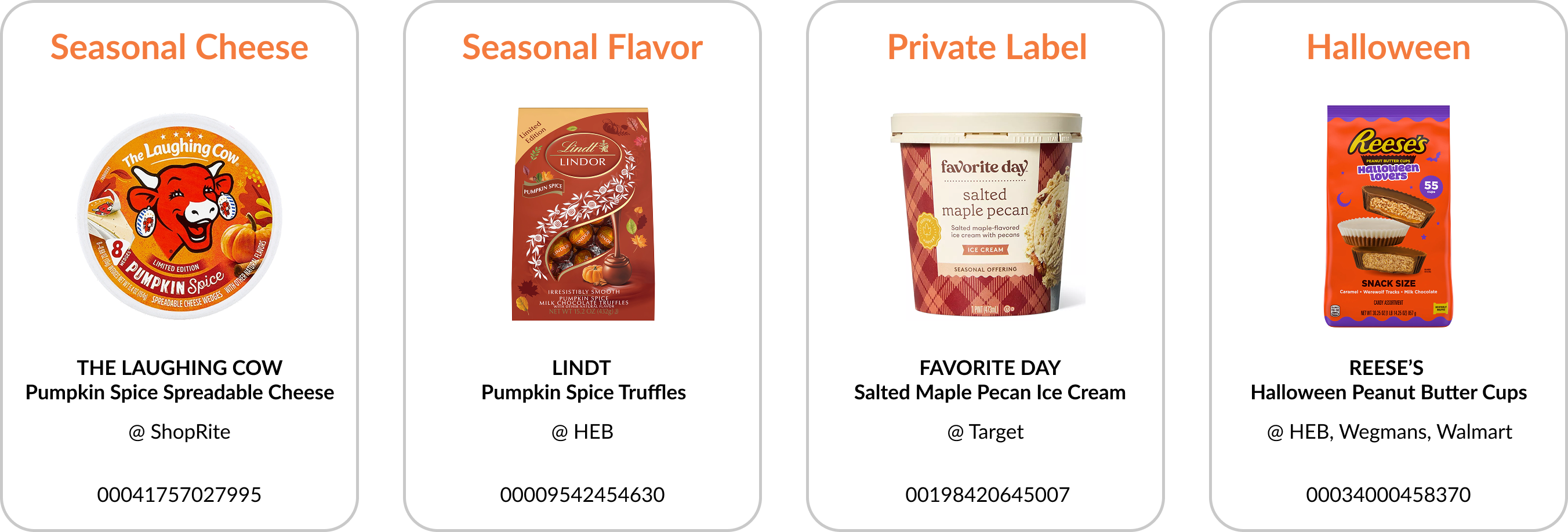
Expanded Aisles Coverage

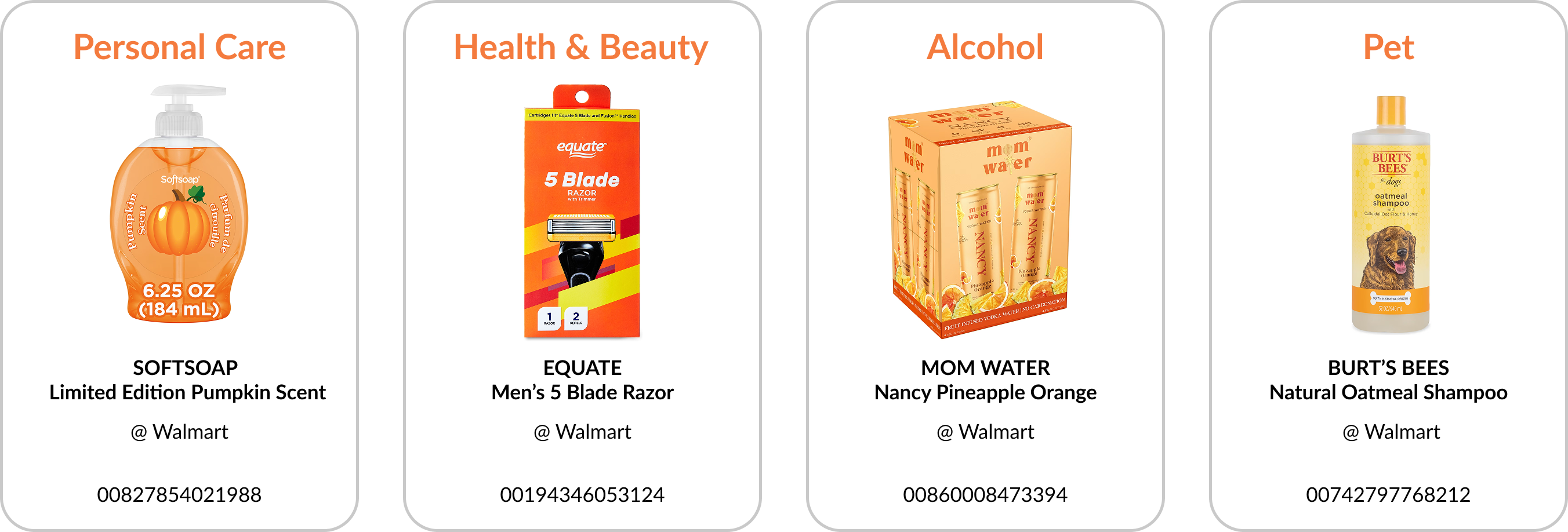
Our catalog continues to expand beyond food to all aisles of the store, with everyday essentials and even pumpkin-scented soap!
Time’s Up for Artificial Food Colors

The FDA’s phase-out of artificial colors is moving fast. Our analysis shows 11.5% of U.S. packaged foods contain synthetic dyes, across all aisles of the store. Most of those products are now on the clock and must be reformulated immediately, or should be phased out through 2027. The impacts will ripple across the entire supply chain, from the farm to consumer marketing.
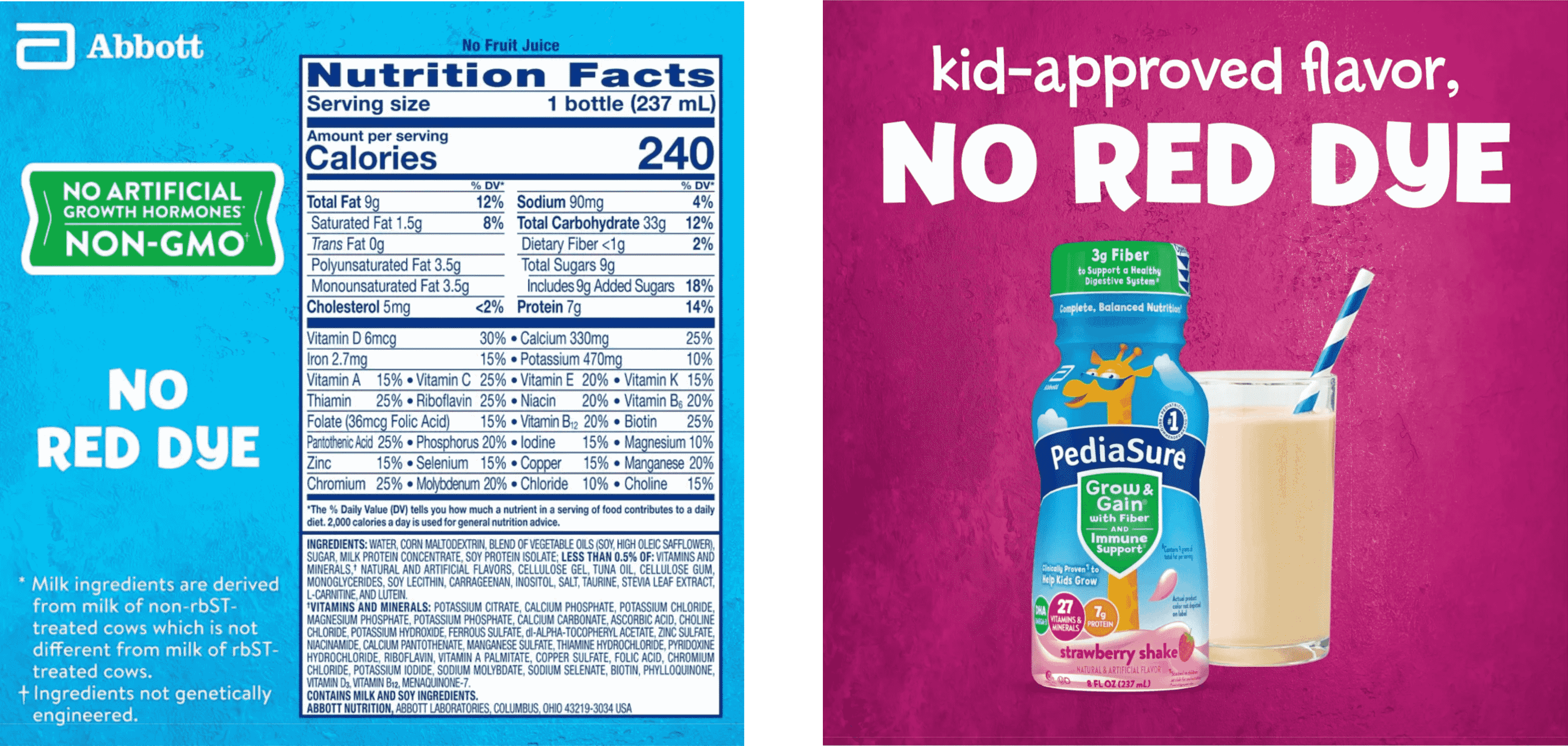
Leading brands like PediaSure already promoting the absence of synthetic dyes.

Foodgraph helps companies turn this regulatory shake-up into an advantage by tracking product changes, measuring compliance, and accelerating innovation using natural colorings.

Contact us to request the whitepaper Time's Up for Artificial Food Colors and learn how the transition from synthetic dyes will affect your business.

Next Catalog Update

Thank you for following our progress! If you need more information, send me a note. I’d love to hear how we can support your work.

Warm Regards,

David

David Goodtree

Founder and CEO, Foodgraph

Blog

More to explore

Discover additional articles, updates, and perspectives.
GLP-1 Rewrites CPG Strategy
Catalog
3 min read

GLP-1 Rewrites CPG Strategy

April 7, 2026
“GLP-1 Support” products are breaking out across grocery, becoming a multi-category phenomenon. Our v50 catalog showcases the brands, retailers, and products leading the pack.
“GLP-1 Support” products have become a multi-category phenomenon, far beyond just supplements. Brands and retailers are executing diverse strategies to win burgeoning consumer demand for new products.
Welcome to Foodgraph’s newest catalog with 1,600,000+ products, an increase of 17% since January. This new v50 catalog, released on March 18, is our largest growth in products ever.
AI note: To build our national CPG catalog and identify product trends, we leverage our industry-specific domain knowledge and AI Native capabilities. Our AI decisions are traced in our Context Graph for CPG, which is durable, replayable, and enables compound learning over time.  

GLP-1 Rewrites CPG Strategy

The best-selling weight-loss drug GLP-1 is rewriting grocery across the aisles.

CPG is feeling the heat:

And the pace is accelerating:

Google Trends, GLP-1 foods

10x Growth in GLP-1 Support Products

The number of CPG products positioned with “GLP-1” soared 10x in just 12 months. 

  • Unique GTINs with GLP-1 positioning zoomed from 38 to 388 products in our catalog over the past year.
  • “GLP-1 Support” or similar phrasing appears on both new products and repositioned products, using on-pack icons and eCommerce titles & descriptions.
  • Products span the aisles from fajitas to yogurt — not just supplements.
  • GLP-1 users prioritize protein per bite and favor high fiber, while shunning sugar and seeking small serving sizes, healthy snacks, and new beverages.
  • Claim words are all over the road — using phrases such as “GLP-1 Activator,” “Booster,” “Friendly”, “Nutrition”, “and Support” — and all terms are unregulated by the FDA.

Some Brands Promote GLP-1 Support. Retailers Don’t.

To capture demand for “GLP-1 Support” products, CPG approaches vary widely, while retailers are lagging.

Nutrition brands launch new product lines.

  • Nestlé targeted the opportunity by launching Vital Pursuit, creating bowls, fajitas, and pizzas with “GLP-1 Support” badges, gaining wide retail distribution.
  • Abbott introduced Protality nutrition shakes — “specially designed for GLP-1 users”, selling multi-packs at Walmart.

Food brands extend existing product lines & deepen commercial ties.

Private label brands pump up the protein & fiber, but avoid GLP-1 positioning.

  • Dozens of new protein- and fiber-rich items are rolling out, such as Kroger’s “Simple Truth Protein” product line.
  • But store brands haven’t used GLP-1 positioning in titles, descriptions, or on-pack.
  • While 3x consumers take GLP-1 drugs versus those who follow a keto diet, retail brands haven’t updated their product positioning beyond that older weight loss approach.

Supplement brands take a novel approach of using disclaimers.

  • Wary of appearing to make a medical claim — which is a regulatory hazard for supplements especially — many brands only reference “GLP-1” in the fine-print.
  • Centrum gummies state “Consult with your health care practitioner on GLP-1 and Centrum use.”
  • This approach gives products the needed GLP-1 association without overt marketing.

Retailers tip-toe into eCommerce tools or miss making PDP updates.

  • A few retailers have posted GLP-1 Support landing pages, like ShopRite and Walmart.
  • Most retailers’ eCommerce listings only include supplements, ignoring relevant foods like Progresso’s new high-protein soups or even their own private label protein and fiber offerings.
  • Titles and descriptions keep legacy references to “Keto, Paleo, Mediterranean and Weight Watchers Diet Friendly”, like Kroger’s PDP for Star Kist Tuna, without referencing GLP-1.

Get the Data: 50 Brands’ Strategies

For a summary of top strategies, click to see 50 Brands’ Strategies for GLP Support, as excerpted in this table:

Foodgraph Takeaways

GLP-1 Support wins the prize for “Food As Medicine” in the mass market.

  • Traditional weight-loss approaches — like precision nutrition, meal kits, and diet apps — require high engagement or expense.
  • The GLP-1 approach requires less consumer commitment and often gets better results.  
  • With GLP-1, dietary adjustments are necessary  — but not extreme — to handle the muscle and intestinal effects of the drug.
This is Food As Medicine for GLP-1:
Choose foods with more protein and fiber during your regular shopping.

Millions of U.S. adults have already benefited from the combination of GLP-1 drugs and Food As Medicine. This grocery phenomenon began in 2021 when the FDA approved the current generation of drugs, and all signs point to continued acceleration.

CPG is capitalizing. But retailers haven’t yet.

  • CPG is pivoting across the aisles from chicken bowls to snack chips to supplements.  
  • Strategies vary from launching new brands and products to just repositioning.  
  • Private Label has embraced protein and fiber, but not yet GLP-1 positioning.
  • Retailers lag in eCommerce, despite their easier digital path versus new product formulation.
The grocery industry is early in its GLP-1 Support journey.

Further Reading

Foodgraph, Harvesting Trends x 1M UPCs
Our original coverage of GLP-1 support products

ADM, Insights from Anti-Obesity Medication Users
80% of consumers are willing to pay more for food and beverage products.

Circana, GLP-1 Users to Represent 35% of U.S. Food and Beverage Sales
GLP-1 users already represent 23% of household shoppers.

Hartman Group, The impact of GLP-1s in an era of disruption
31m US adults currently take GLP-1 drugs to lose weight and manage diabetes.

Foodgraph Next

Our next major catalog update will arrive in time for Mother’s Day, Memorial Day, and Graduations.

How can we support your 2026 goals? Let's talk!

Warm Regards,

David

David Goodtree

Founder and CEO, Foodgraph

GLP-1 Support: 50 Brands. 4 Strategies.
Data
3 min read

GLP-1 Support: 50 Brands. 4 Strategies.

April 7, 2026
“GLP-1 Support” products are appearing everywhere from fajitas to yogurt, and more. Download the table for a breakdown of 50 brands and the 4 strategies they’re executing.
“GLP-1 Support” products are rolling out fast to serve consumers who are taking this blockbuster weight loss drug. Brands are scrambling to meet consumer appetite for more protein and fiber, across all aisles of the store.
See the summary table below of 50 CPG brands and the 4 strategies they’ve chosen to capture the new demand.

GLP-1 Support: Much More Than Supplements

“GLP-1 Support” products are designed or marketed to make the consumer’s weight loss efforts sustainable and effective while taking these drugs.

The fast growth of GLP-1 drugs is rewriting CPG strategy:

  • 31m US adults already take GLP-1 drugs, representing 23% of household shoppers.
  • Consumers are dramatically shifting baskets to more protein and fiber, and less carbs and sugar.
  • The number of CPG products positioned with “GLP-1” soared 10x in just 12 months. 
  • Brands across categories are feeling the heat to satisfy the demand and differentiate.

For background on the GLP-1 phenomenon — and its effects on CPG — read our companion blog post GLP-1 Rewrites CPG Strategy

The 4 Strategies: How Brands Approach GLP-1 Support

To capture demand for “GLP-1 Support” products, CPG takes one of four main approaches:

  1. Acquire a brand, such as Lactalis’ purchase of :ratio.
  2. Launch a new brand, such as Abbott’s introduction of Protality.
  3. Launch new products, such as Bonduelle’s lunch bowls.
  4. Update messaging, such as Haleon’s Centrum and Tums.

Get the Data: 50 Brands’ Strategies

Use the table below to explore the 4 strategies by 50 specific brand names:

  • The strategy column lists the approach used by the specific brand name.
  • The keywords column shows whether each brand uses the terms  “GLP-1, “protein, and/or “fiber” on packaging and digital content.
  • The “GLP-1” usage column lists whether the term “GLP-1” is used on-pack, in eCommerce text, using disclaimer language, or none (no explicit "GLP-1" reference).

Instructions:

  • Click the “columns” button to select the fields displayed.  
  • Click the “XLSX” button to download the data in an Excel spreadsheet.
  • Use the column header controls to sort and filter the rows.

CPG Brand Positioning: GLP-1 Support

Download the full dataset

Enter your details below to download this resource.

Strategy Brand owner Brand name Owner type Category Keywords "GLP-1" usage

How Can We Help?

For more information about GLP-1 and CPG, read our blog post GLP-1 Rewrites CPG Strategy.

Foodgraph offers the largest US catalog of CPG product data.
How can we support your needs? Let's talk!

Warm Regards,

David

David Goodtree

Founder and CEO, Foodgraph

The Great AI Debate
AI
3 min read

The Great AI Debate

March 11, 2026
Are humans giving up our role to AI in creating great products? Here’s a peek into our internal debate — and three of our reference points.

Our executive team is having a heated debate about the proper use of AI.
The debate is passionate, respectful — and I believe — highly productive.

AI is deceptively good. Initial AI results are high-quality. The LLM explains its “thinking” robustly in natural language.  Humans are convinced.

The user may even say “My friend Claude got it right”.

Our CTO is worried that AI tools are becoming agents of human assimilation. Users unwittingly abdicate their responsibility to a convincing bot, because the results appear credible. He calls this phenomenon the “Borgification” of software engineering, referring to the famous Star Trek story line.  

Our VP PM is more sanguine, saying “Claude is my fast dumb friend” who needs oversight. She agrees with Anthropic’s President Daniela Amodei, who believes “Claude is really a tool to help promote your ability to think more deeply, to solve problems, and to be ambitious about the types of projects you are taking on.”

steve_jobs350

Our AI Architect shared how Steve Jobs described a rock tumbler as a metaphor for how great ideas come to life. This machine smashes together crude, unfinished inputs to create beautiful polished stones. Jobs explained that 90% of the work in creating great products is not in the big idea or the raw materials, but through the combination of friction + time + teams to turn the inputs into amazing products.

Job’s metaphor rings true to me:
Friction + time + teams create great products, not AI or other tools.

At Foodgraph, we collect raw data from dozens of sources, debate ideas vociferously, use AI as creation tools, and smash everything together iteratively to develop services that have premium market value.

We’ve built the first national catalog of CPG product data, after years of initial R&D. Our ongoing R&D work is accelerated by AI, but does not displace our hard-won domain knowledge and human judgement that curates data services and earns high-value, long-term contracts.

Our platform — developed through friction + time + teams — delivers product data and services never available before. Our data includes not just large brands, but also private label products and long-tail items. Our services solve for the mess that has vexed CPG & commerce, for decades.

Being AI Native helps us go faster and smarter, while our Context Graph compounds our learning.

The SaaS Apocalypse may be coming for some, but only when humans abdicate their role.

AI raises the bar of what humans can do — and are now expected to do.

To paraphrase Steve Jobs:
We — the humans — are the rock tumblers, not AI.

Watch: Daniela Amodei, Responsible AI and Steve Jobs’ Rock Tumbler Metaphor.

How Can We Help Your Work?

Send me a note with thoughts or questions. I’d love to hear how we can support your work.

Warm Regards,

David

David Goodtree

Founder and CEO, Foodgraph

Get better CPG product data today.

Book a demo today to learn how Foodgraph can help.

By using this website, you agree to the storing of cookies on your device to enhance site navigation, analyze site usage, and assist in our marketing efforts. View our Privacy Policy for more information.